Nursing Windshield Survey: 7 Powerful Steps for a Stronger Community Assessment
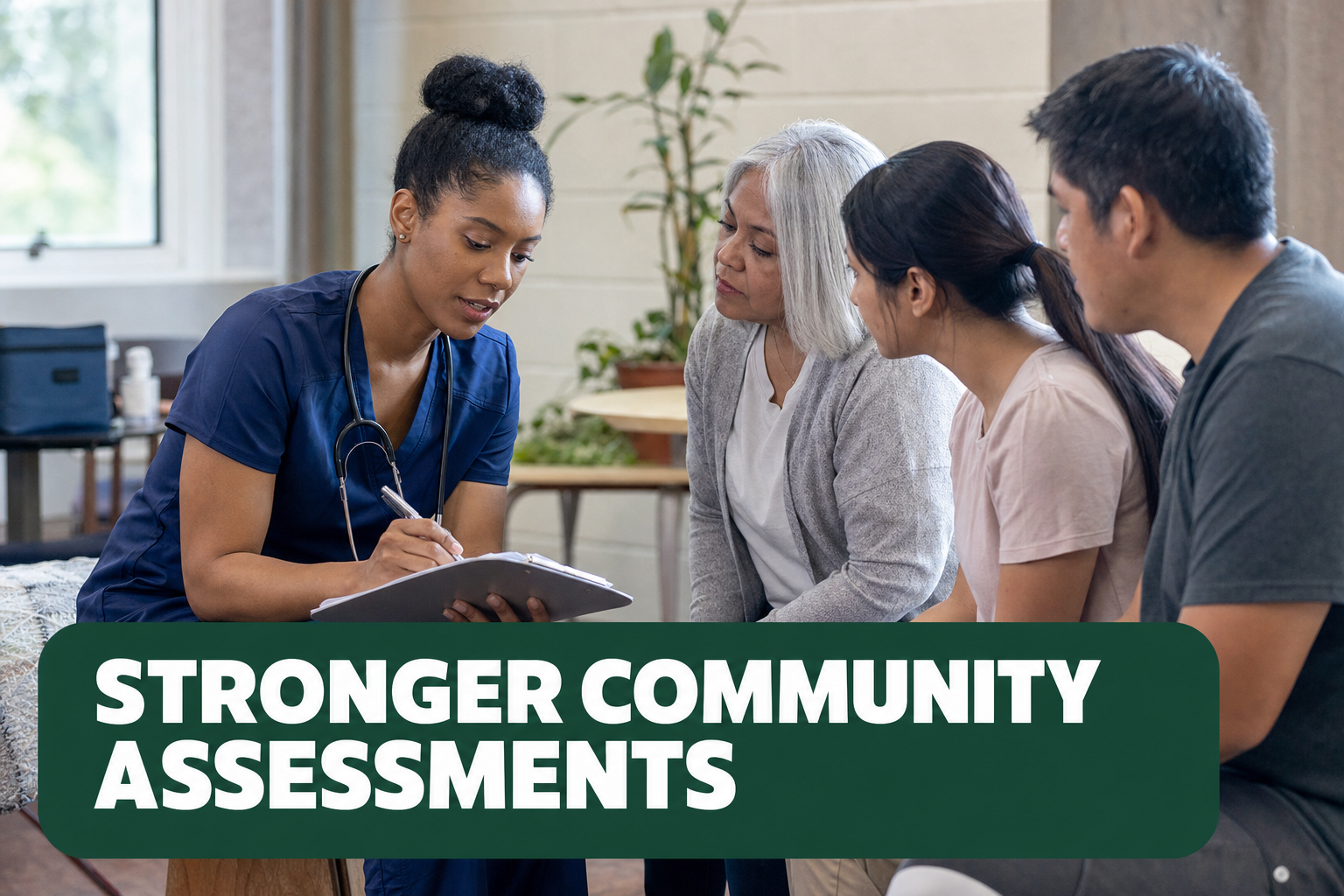
Direct answer: A nursing windshield survey is a structured community observation used in public health or community health nursing to identify visible strengths, risks, resources, environmental conditions, and social determinants that may affect population health. A strong survey separates objective observations from interpretation, connects findings to credible data, and leads to practical nursing priorities.
In many community health nursing courses, the assignment sounds simple: drive or walk through a neighborhood and write down what you see. The stronger paper goes further. It turns observation into careful assessment, compares visible conditions with public health data, and explains how nurses can respond without making unfair assumptions about residents.
This guide shows nursing students how to plan, document, analyze, and write a nursing windshield survey that is organized, evidence-informed, and clinically useful. If your assignment later becomes a care plan, community diagnosis, presentation, or evidence-based proposal, you can also use OakWrites resources on nursing care plans, nursing concept maps, and nursing evidence-based practice papers.
What Is a Nursing Windshield Survey?
A windshield survey in nursing is a systematic observation of a defined community from a vehicle, public transportation route, or walking path. In community health nursing, it helps students notice visible factors that may influence health, including housing conditions, transportation, recreation spaces, environmental hazards, safety indicators, health services, schools, churches, businesses, and signs of social connection.
Public health teaching resources commonly describe windshield and walking surveys as systematic observations used to assess community conditions. In nursing coursework, that method becomes part of a broader community assessment. The nurse does not diagnose a community based only on a drive-through impression. Instead, the survey creates early observations that should be checked against interviews, public health data, epidemiology sources, and course requirements.
Why a Nursing Windshield Survey Matters
This assignment matters because it trains students to think at the population level. In bedside nursing, assessment may focus on one patient’s vital signs, medications, symptoms, and care priorities. In community health nursing, assessment expands to the setting where people live, work, learn, shop, worship, and travel.
Social determinants of health are central to that work. Healthy People 2030 defines them as the conditions in the environments where people are born, live, learn, work, play, worship, and age that affect health, functioning, quality of life, and risks. CDC resources similarly emphasize that nonmedical factors such as housing, education, transportation, employment, and safe environments can influence outcomes.
A strong community observation can help identify strengths such as parks, clinics, schools, libraries, sidewalks, bus routes, and local organizations. It can also suggest possible risks, such as unsafe intersections, limited grocery options, vacant buildings, poor lighting, pollution sources, or barriers to accessibility. The key word is possible. A survey can suggest concerns, but it cannot prove why a condition exists or how residents experience it.
7 Steps to Complete the Survey
1. Clarify the assignment requirements before you observe
Before starting your nursing windshield survey, read the rubric carefully. Some instructors assign a ZIP code, census tract, city district, or 10-block radius. Others require two visits at different times, a community interview, APA references, or a connection to a community nursing diagnosis. Write down the required scope, safety rules, headings, and source expectations before you begin.
If the paper becomes a larger written assignment and you need help organizing the evidence, OakWrites offers academic document support services for structure, editing, formatting, and clarity while you remain responsible for your own observations and course integrity.
2. Define the community boundaries
A common weakness is a vague community description. Do not simply write, ‘I surveyed downtown’ or ‘I drove around my neighborhood.’ Define the area clearly enough that the reader knows what you assessed.
You might identify the community by ZIP code, census tract, neighborhood name, street boundaries, a clinic or school as the focal point, a driving route, or an urban, suburban, rural, or mixed setting. For example: ‘The survey focused on a 12-block area surrounding Eastwood Community Clinic, bordered by Pine Street to the north, Jackson Avenue to the south, 8th Street to the east, and 3rd Street to the west.’
3. Plan for safety, privacy, and ethical observation
A nursing windshield survey should be completed safely and respectfully. Do not trespass, photograph people without permission, record private conversations, or approach residents if your instructor has not required interviews. If walking, choose daylight hours when possible, stay aware of traffic, and follow school or clinical-site safety guidance.
Ethical observation also means avoiding stereotypes. Visible housing conditions, parked cars, business types, or street activity do not tell you everything about residents’ income, values, safety, culture, or health behaviors. Use neutral language such as ‘three vacant storefronts were visible on Main Street’ rather than judgmental wording such as ‘the area looked hopeless.’
4. Observe both strengths and risks
Many students focus only on problems. A stronger assessment identifies assets as well as risks. Assets may include a busy community center, well-used playground, public library, pharmacy, health clinic, food pantry, school, senior center, bus route, sidewalks, bike lanes, faith organizations, local businesses, or signs of neighborhood pride.
Risks may include broken sidewalks, limited shade, heavy traffic, unsafe crossings, lack of accessible entrances, few fresh food options, poorly maintained housing, industrial pollution sources, limited green space, or visible distance from health services. Your job is not to label the community as good or bad. Your job is to identify conditions that may affect health and explain why they matter from a nursing perspective.
5. Organize observations by nursing-relevant categories
Use a structured template so the paper does not become a random list. Community health nursing assessments often look at the built environment, health services, transportation, food access, safety, recreation, social support, education, communication, and environmental conditions.
A helpful method is to divide each note into three parts: what you saw, why it may matter, and what additional data is needed. If you observe a long distance between residential blocks and the nearest grocery store, the nursing relevance may involve nutrition access, diabetes prevention, or transportation barriers. The additional data might include census data, local food access maps, CDC PLACES estimates, or local health department reports.
6. Compare observations with credible public health data
Direct observation becomes stronger when paired with credible secondary data. CDC PLACES provides local estimates for chronic disease measures, health-related behaviors, preventive practices, disabilities, and social needs for U.S. counties, places, census tracts, and ZIP Code Tabulation Areas. Local health departments, hospital community health needs assessments, Census data, and county health rankings may also help depending on your instructions.
Use data to confirm, complicate, or question your observations. Visible parks may suggest opportunities for physical activity, but local data may show high rates of inactivity. That contrast can lead to better questions about safety, accessibility, lighting, disability access, work schedules, or transportation.
7. Turn findings into a careful nursing interpretation
The final step is analysis. After completing the observation, choose the most important patterns and explain them in nursing language. You may be asked to write a community diagnosis, identify priority needs, propose interventions, or prepare a presentation.
A useful pattern is: observation, health connection, supporting data, priority population, and nursing response. For example, a lack of safe walking routes near senior housing may connect to fall risk, social isolation, physical inactivity, and access to services. A realistic response might include fall-prevention education, referral to transportation resources, partnership with a senior center, or advocacy through community partners.
Nursing Windshield Survey Observation Table
Use this sample table to keep your notes organized before writing. Adjust the categories to match your rubric.
| Category | What to observe | Nursing relevance | Possible source |
|---|---|---|---|
| Housing | Condition, density, accessibility, vacant buildings | Safety, asthma triggers, fall risk, health equity | Census data, local housing reports |
| Transportation | Bus stops, sidewalks, crosswalks, traffic, bike lanes | Access to care, medication pickup, food access, injury prevention | Transit maps, local planning data |
| Food access | Grocery stores, corner stores, markets, fast food, pantries | Nutrition, diabetes prevention, hypertension management | Local health department data |
| Health services | Clinics, pharmacies, urgent care, dental or mental health services | Preventive care, chronic disease follow-up, medication access | Clinic directories |
| Recreation | Parks, playgrounds, trails, lighting, maintenance | Physical activity, child health, mental health, social connection | CDC PLACES, parks department data |
| Safety and environment | Lighting, traffic hazards, pollution sources, abandoned lots, noise | Injury risk, respiratory health, stress, perceived safety | City or environmental data |
Example Paragraph
Here is a short example of how to move from observation to analysis without overclaiming:
The surveyed area included a six-block residential corridor surrounding a community clinic. Several strengths were visible, including an active church, a public library, a pharmacy, and a bus stop within two blocks of the clinic. Potential risks included cracked sidewalks near senior apartments, limited shade along the main road, and no full-service grocery store within the observed route. These findings may affect access to preventive care, safe walking, and nutrition, especially for older adults and residents without private transportation. Additional local health data would be needed before identifying final community priorities.
Common Mistakes to Avoid
Using judgmental or biased language
Words such as ‘bad area,’ ‘lazy residents,’ or ‘dangerous people’ do not belong in professional nursing writing. Use specific observations instead. Rather than ‘unsafe neighborhood,’ write, ‘streetlights were not visible on two residential blocks, and two crosswalks near the school had faded markings.’
Confusing observation with diagnosis
A single drive through a neighborhood does not prove a diagnosis. Your observations may suggest risks or needs, but they should be supported with data. If you need help turning assessment findings into a diagnosis, OakWrites has a related guide on writing clearer nursing diagnosis statements.
Ignoring community strengths
Community health nursing is not only about deficits. A trusted church, library, school nurse, food pantry, pharmacy, or neighborhood association may be part of the solution.
Writing a travel diary instead of an assessment
Chronological notes can help during the observation, but the final paper should be organized by themes such as housing, transportation, food access, health resources, safety, recreation, and social support.
Final Checklist Before Submission
- Did you define the community boundaries clearly?
- Did you follow the assigned route, time, format, and rubric?
- Did you separate objective observations from interpretation?
- Did you include both strengths and risks?
- Did you connect findings to social determinants of health?
- Did you support major claims with credible data?
- Did you avoid stereotypes and judgmental language?
- Did you explain why each finding matters for nursing?
- Did you cite sources correctly in the required style?
If you are preparing a larger community health nursing paper, presentation, or final project, OakWrites can help with organization, editing, citation formatting, and presentation clarity. You can see how the OakWrites process works, view pricing, or submit your nursing assignment for review.
Frequently Asked Questions
What is the main purpose of a nursing windshield survey?
The main purpose of a nursing windshield survey is to observe visible community conditions that may affect population health. It helps nursing students identify strengths, risks, resources, and social determinants before developing community health priorities or interventions.
What should I include in a nursing windshield survey?
Include the community boundaries, date and time of observation, housing, transportation, food access, health services, safety, parks, schools, social resources, environmental conditions, community strengths, potential risks, supporting data, and nursing interpretation.
Is a windshield survey the same as a community assessment?
No. A windshield survey is one part of a community assessment. A complete community assessment may also include interviews, epidemiological data, demographic data, public health reports, community partner input, and analysis of social determinants of health.
Can I do a nursing windshield survey on foot?
Yes, if your instructor allows it and safety conditions are appropriate. A walking survey may reveal details that are harder to see from a vehicle, such as sidewalk condition, accessibility barriers, traffic noise, crosswalk safety, and how public spaces are used.
How do I avoid bias in a nursing windshield survey?
Use neutral, specific language. Describe what you observed, avoid assumptions about residents, include strengths as well as risks, and support interpretations with credible data. When uncertain, state what additional information would be needed.
Where can I get help editing a nursing windshield survey paper?
OakWrites provides academic editing, proofreading, formatting, citation, and document-support services. If your nursing windshield survey draft is written but needs clearer structure or APA cleanup, you can use the OakWrites Order Now page to submit your requirements.
Key Takeaways
- A nursing windshield survey is a structured observation method used in community health nursing.
- The best surveys connect visible community conditions to social determinants of health, public health data, and nursing priorities.
- Strong papers separate observation from interpretation and avoid stereotypes.
- Community strengths are just as important as risks because they can support realistic interventions.
- Credible sources such as CDC PLACES, Healthy People 2030, Community Tool Box, local health departments, and AACN resources can strengthen your analysis.
Sources Used
- American Association of Colleges of Nursing: Windshield Survey of the Community
- Community Tool Box: Windshield and Walking Surveys
- Healthy People 2030: Social Determinants of Health
- CDC: Social Determinants of Health
- CDC PLACES: Local Data for Better Health
- NACCHO: MAPP Community Health Assessment Framework
Need Help With Your Assignment?
Submit your instructions through the OakWrites Client Portal. We will review your request and provide a personalized quotation before asking for payment.
Start Your AssignmentRelated Articles